

The Maurice Miller Trial: The Glossip Violation, Hidden Evidence and more
Marietta is in Love County Oklahoma, where Maurice LaDon Miller was framed by OSBI Field Agent/Investigator David Seals and District Attorney Craig Ladd who has a faulty reputation so click here to find out more. Evidence DA Craig Ladd of Marietta Oklahoma Is A Criminal
Twelve jurors and a judge
decided the fate of an innocent man after being presented with nothing but speculation in a case that required proof beyond a reasonable doubt.
Here, we dissect this case piece by piece so the public can see that there was a huge injustice in the justice system, and how Love County ruined the life of a man who has now given 21 years of his life to the Oklahoma prison system for a crime he did not commit.
If you like the news, true crime, cop shows, and stories that expose corruption, this is a case you'll want to review.
If, after reviewing the defense's evidence below, you believe Oklahoma did Maurice wrong, sign the petition at change.org by clicking right here.

Statement & Instructions to the Public
You Are the Jury of Public Opinion
You, the public, are now being asked to review the evidence and decide whether justice was served in the case of Maurice Ladon Miller.
We bring you the first crime scene and case file in what we believe is the wrongful conviction of an innocent man.
Every exhibit presented as evidence is real. These documents and materials were released to Maurice’s family directly from his official case files.
You now have the opportunity to examine the evidence for yourself, ask questions, identify inconsistencies, and help bring public attention to a case that has remained hidden for far too long.
The Evidence
The evidence presented throughout this case file reveals serious questions surrounding the investigation, prosecution, and conviction of Maurice Miller.
The family maintains that Maurice Miller was intentionally framed and set up by trusted officials the people voted in and are those responsible for prosecuting and investigating the case, including Love County District Attorney Craig Ladd and OSBI Field Agent David Seals, in connection with the double murder case in Marietta, Oklahoma.
Every person who reviews this information has the right to analyze the facts, examine the exhibits, and reach their own conclusion.
Your Role
Read each section below carefully. Review every exhibit. Consider the timeline, the testimony, the investigation, and the evidence presented.
If, after reviewing the complete case file, you believe Maurice Miller may be innocent, or you believe there are too many unanswered questions and inconsistencies to accept the conviction without further review, you can help bring awareness and demand that justice be examined.
How You Can Help
1. Sign the Petition
Click the link at the top of this highlighted sign the petition or use the link at the bottom of this page and add your name to the petition calling for attention and review of Maurice Miller’s case.
2. Support the Fight for Justice: Taking Donations
Use the donation link to contribute to Maurice Miller’s “Fight for Justice” account. (Highlighted at the top of to be reviewed at the bottom after you read the evidence.)
Funds will help support legal efforts, case review, attorney fees, and efforts to bring this case to the attention of journalists, advocates, and organizations that can help seek justice.
The Truth Must Be Examined
If you believe Maurice Miller was wrongfully convicted or that his case raises serious questions, help bring attention to his case.
Contact news outlets, Oklahoma officials, and organizations that review wrongful convictions. Ask them to examine the evidence and demand that the truth be investigated.
Now, the evidence is in your hands.
An Oklahoma Man Framed By The Oklahoma State Bureau Of Investigations
Miller, 28, faces two counts of first-degree murder in the stabbing deaths of the elderly West couple, who were apparently awakened by suspects climbing through their unlocked kitchen window.
Prosecutor Craig Ladd said the motive for the Dec. 6, 1994, slayings was robbery and called several witnesses to testify about coin jars the Wests kept loose change in. The coins were missing, along with some costume jewelry.
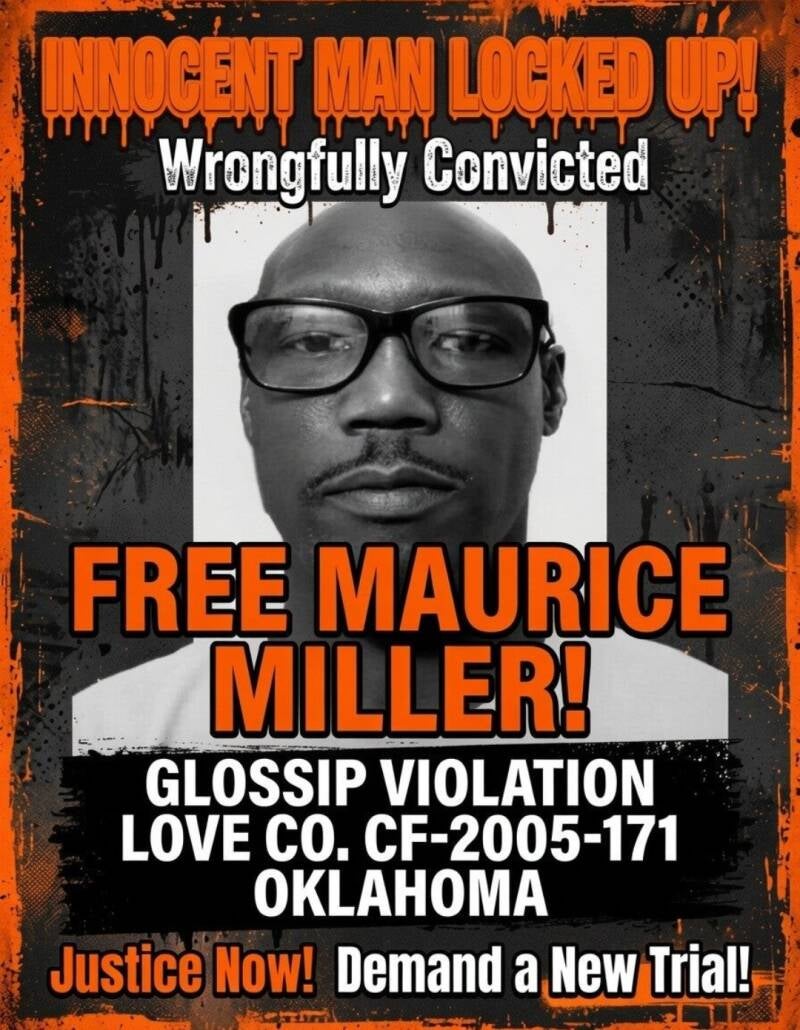
EXHIBIT A
Comparative Analysis of Glossip v. Oklahoma, Love County CF-2005-171, and Napue v. Illinois
Comparative Summary table
Glossip v. Oklahoma (2025)
In Glossip v. Oklahoma (2025), the case centered on the testimony of Justin Sneed, an admitted killer whose statements were used to secure conviction. His testimony was later challenged for being inconsistent and misleading, raising serious concerns about whether the verdict rested on reliable evidence. The legal issue was not just what Sneed said, but whether the State allowed potentially false or unreliable testimony to influence the outcome without correction. At the center of the Supreme Court’s analysis was a core principle from Napue v. Illinois (1959): due process is violated when the State knowingly allows false testimony to stand uncorrected. In that framework, the Court reaffirmed that convictions cannot rest on testimony that is materially false or misleading.
Love County Case CF-2005-171
In Love County Case CF-2005-171, the structure is similar but the facts are disputed in a different direction. The conviction allegedly rested on a single witness, Tina Mosley, who was the sole link between Maurice Miller and the alleged crime. Unlike Glossip, the concern here is not only reliability of testimony, but how that testimony was obtained and maintained. The claim is that Mosley’s statements were the product of pressure and coercion, including alleged harassment and the use of a material witness warrant that resulted in her detention. Over time, her statements were reportedly challenged by letters and recantations, raising questions about whether the jury ever heard a fully accurate or unpressured version of her account.
The Constitutional Thread Connecting All Three Cases
Across all three frameworks—Glossip, Love County CF-2005-171, and Napue—the same constitutional thread runs through each: due process cannot tolerate convictions built on unreliable or false testimony.
Application of the Napue Principle
In Glossip, the issue was whether the State failed to correct or properly address inconsistent testimony from a key witness who had a strong incentive to testify. In Love County, the issue is framed as whether the State relied too heavily on a single pressured witness while ignoring contradictions and later objections tied to her statements. And in Napue, the Supreme Court established the controlling rule: when false testimony affects the integrity of a verdict, the conviction cannot stand.
The State’s Role in Each Case
The State’s role is different in each case but connected in principle. In Glossip, the concern is incentive-driven testimony tied to avoiding the death penalty. In Love County, the concern is blatant coercion through arresting Tina Mosley and keeping her under detainment which pressured her into becoming a material witness. In both situations, the question becomes whether the prosecution allowed the jury to rely on testimony that wasn't fully reliable or fairly presented.
Evidentiary Concerns and Witness Credibility
The evidentiary disputes also follow the same pattern. In Glossip, post-conviction review focused on evidence undermining the credibility of the State’s key witness. In Love County, the concern is the same and that letters, affidavits, and recantations were not properly weighed or disclosed in a way that would have allowed full credibility assessment. Under Napue, the governing principle is clear: if the State’s case depends on testimony that is false or misleading, and that truth matters to the verdict, the conviction is constitutionally compromised.
Procedural Remedies and Constitutional Relief
Procedurally, the outcomes differ but the remedy concept is consistent. In Glossip, the Supreme Court recognized due process violations tied to witness testimony issues. In Napue, the remedy is straightforward: a conviction cannot stand when false testimony could have influenced the jury. In Love County, the relief being sought follows that same logic—if the conviction rests on contested or improperly obtained testimony, then post-conviction relief and a new trial become the necessary constitutional response.
Conclusion
At the core of all three is a single legal idea: finality does not outweigh fairness. Whether the issue is inconsistent testimony, coercion, or failure to correct false statements, the Constitution requires that convictions be built on truth the jury can trust, not testimony that is pressured, misleading, or left uncorrected by the State.

EVIDENCE CHAIN / COMPARATIVE ANALYSIS
Glossip v. Oklahoma (2025) • Napue v. Illinois (1959) • Love County Case No. CF-2005-171
This exhibit provides a comparative analysis of constitutional, evidentiary, and due process issues raised in Glossip v. Oklahoma, Napue v. Illinois, and the conviction of Maurice LaDon Miller in Love County Case No. CF-2005-171.
The purpose of this analysis is to examine recurring legal themes involving witness reliability, government pressure, prosecutorial obligations, and the integrity of criminal convictions.
The comparative summary above serves as an overview of the constitutional issues discussed in greater detail below. The analysis that follows explains why the principles recognized in Glossip and Napue are relevant to the claims raised in Love County Case No. CF-2005-171 and provides a framework for evaluating the evidence presented throughout this case record.
PART I: COMPARATIVE LEGAL ANALYSIS
I. Witness Reliability and Credibility
Glossip v. Oklahoma
- Justin Sneed served as the State’s primary witness.
- Sneed admitted involvement in the crime.
- His testimony was central to the conviction of Richard Glossip.
Love County Case No. CF-2005-171
- Tina Marie Mosley served as the State’s primary witness.
- She was the only witness directly connecting Maurice LaDon Miller to the alleged offense.
- Questions have been raised concerning the reliability and consistency of her statements.
Napue v. Illinois
- The conviction involved testimony later determined to be false or misleading.
- The Supreme Court emphasized the importance of truthful witness testimony in criminal proceedings.
II. Coercion and Government Pressure
Glossip v. Oklahoma
- The witness received benefits in exchange for cooperation.
- Testimony was provided under circumstances raising concerns regarding motive and reliability.
Love County Case No. CF-2005-171
- Allegations exist that the witness was subjected to prolonged investigative pressure.
- The witness was detained under a material witness warrant.
- Letters and other records allege repeated contact and pressure by investigators.
Napue v. Illinois
- Government influence affecting witness testimony undermines due process.
- Reliability of testimony becomes a constitutional concern when pressure or inducements are involved.
III. Prosecutorial Conduct and Disclosure Obligations
Glossip v. Oklahoma
- Prosecutors failed to correct testimony later determined to be materially inaccurate.
- The State’s handling of witness information became a central issue before the United States Supreme Court.
Love County Case No. CF-2005-171
- Allegations exist that witness objections, recantations, and credibility concerns were disregarded.
- Questions have been raised regarding disclosure obligations and witness reliability issues.
Napue v. Illinois
- Prosecutors have a constitutional duty to correct false testimony.
- Due process is violated when the State knowingly allows false testimony to stand uncorrected.
IV. Impact on the Conviction
Glossip v. Oklahoma
- The conviction depended heavily upon the testimony of a single witness.
- The witness’s credibility became critical to the validity of the verdict.
Love County Case No. CF-2005-171
- The conviction relied substantially upon testimony provided by Tina Marie Mosley.
- Defense filings challenge both the reliability of the testimony and the circumstances under which it was obtained.
Napue v. Illinois
- A conviction cannot stand when false testimony could reasonably have influenced the jury’s verdict.
V. Constitutional and Due Process Implications
Glossip v. Oklahoma
- Due process violations were recognized.
- Relief was ultimately granted.
Love County Case No. CF-2005-171
Claims include:
- Witness coercion
- Deprivation of liberty under color of law
- Prosecutorial misconduct
- Violations of Fourteenth Amendment due process protections
Napue v. Illinois
- Protects defendants from convictions obtained through false or misleading testimony.
- Ensures fairness and integrity in criminal proceedings.
VI. Comparative Findings (Summary)
The comparison demonstrates recurring constitutional themes present in all three matters:
- Reliability of witness testimony
- Government inducement or coercion
- Prosecutorial disclosure obligations
- Due process protections
- The integrity of criminal convictions
At their core, Glossip and Napue establish that convictions obtained through false, misleading, or improperly influenced testimony raise serious constitutional concerns when there is a reasonable likelihood that such testimony affected the outcome of the proceeding.
The sections that follow provide a detailed examination of the factual record in this case, including the evidence presented at trial and the evidence developed in post-conviction proceedings, and newly discovered evidence challenging the conviction of Maurice LaDon Miller.
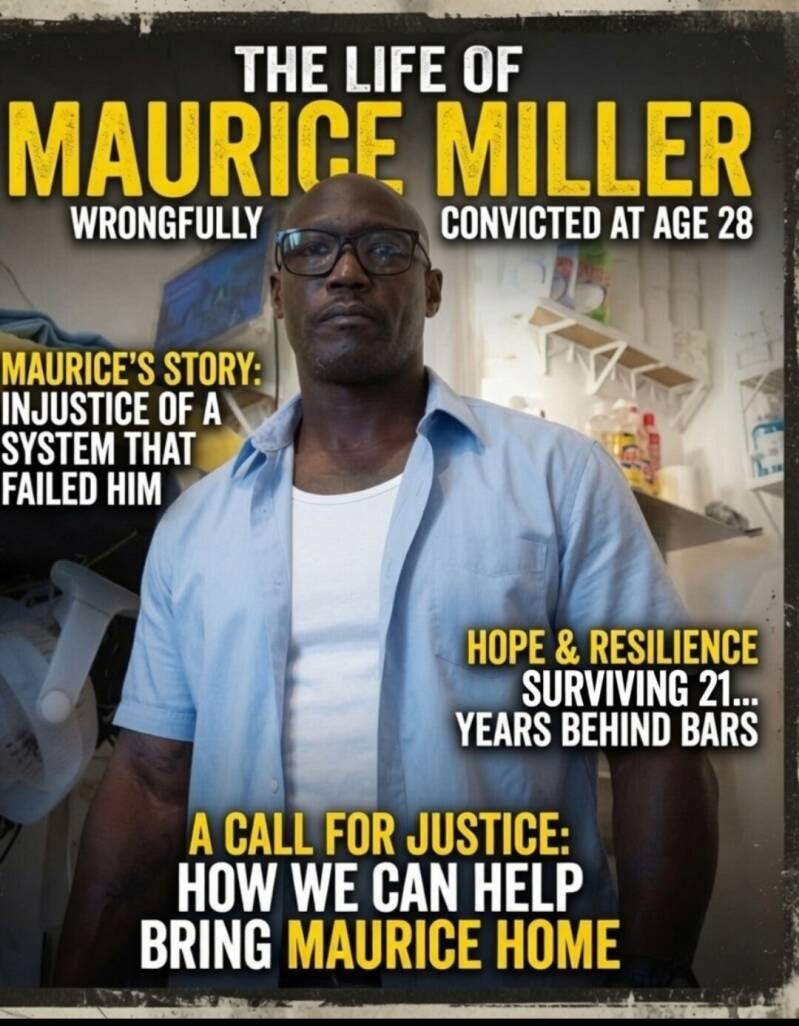
EVIDENCE OVERVIEW: A Complete Case Breakdown
The Case of Maurice LaDon Miller (Love County Case Nos. CF-2005-69 / CF-2005-171)
What This Case Is About
This case involves a 1994 homicide that was not solved for about 11 years. When it was reopened in 2005, the investigation led to the arrest and conviction of Maurice LaDon Miller in 2006.
The conviction was based mainly on two things:
- The testimony of a single key witness
- Forensic DNA testing that has produced mixed and conflicting interpretations over time
Understanding the Case: A Call to Action
Below we start to break down this case piece by piece just to show the public why they should get behind and petition to free an innocent man. It’s essential to examine the facts thoroughly, as many people may not be aware of the details that led to this wrongful conviction. By shedding light on the evidence, the inconsistencies in the prosecution's arguments, and the lack of credible witnesses, we aim to provide a clearer picture of the injustice that has occurred.
Each element of this case reveals significant flaws that not only question the validity of the verdict but also highlight the urgent need for public support in seeking justice. The more people understand the situation, the stronger the movement to advocate for his freedom will become. Together, we can make a difference and help rectify this grave error in the justice system.
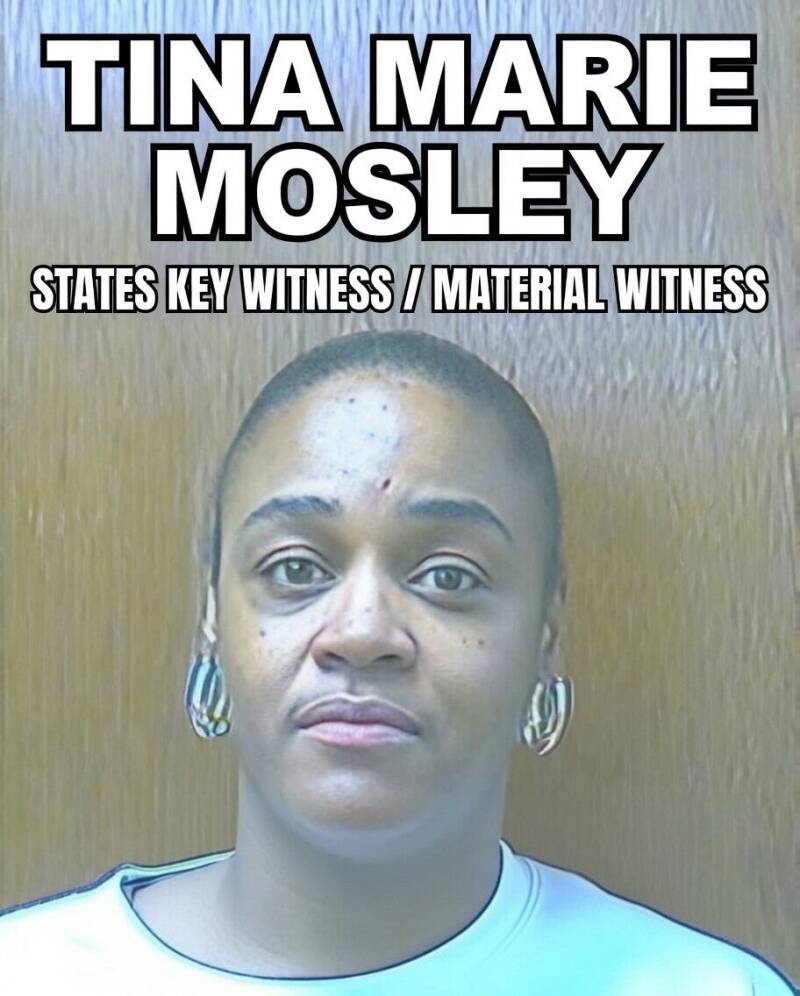
Testimony of the State's Key Witness: Tina Marie Mosley
Early Relationship and Background
A major part of the State's case rested on one witness: Tina Marie Mosley.
In 1996, Maurice Miller had already been identified as a suspect in the Love County murders. During this period, tensions existed between Miller and Mosley, including a strained personal relationship in which she allegedly made statements suggesting she could "get him in trouble" if he would not remain involved with her.
Mosley was also known to law enforcement as a booster—an individual involved in shoplifting and the resale of stolen merchandise. Investigators were aware of this history and repeatedly contacted, detained, and questioned her over time. What followed was not a single interview but years of continued police contact that created an atmosphere where she felt threatened, and pressured. And this became leverage and a way to manipulate her into doing what they wanted.
Law Enforcement Contact and Development of Her Statements
According to the defense position, Mosley's statement did not come from firsthand knowledge of the crime.
She was not an eyewitness. She was not present when the murders occurred. She never claimed to have witnessed the crime. The State's entire theory depended on her claim that Maurice Miller allegedly told her about it.
The defense contends that her original contact with police came during a period when she was angry with Miller after the deterioration of their relationship. According to this position, she contacted law enforcement claiming that Miller had confessed involvement in the Love County murders.
After that initial statement, OSBI Agent David Seals continued harassing and bringing Mosley in for interviews over an extended period. During those interviews, investigators repeatedly discussed details of the case with her. The defense position is that many of the facts later reflected in her statements were learned through repeated exposure to investigators who gave her facts, and theories of the case–claiming Miller did it! All of the information about the case came from investigator David Seals rather than through any independent knowledge provided by Maurice Miller.
The concern is straightforward: if a witness is repeatedly exposed to investigative details over time, it becomes difficult to determine whether later testimony originated from personal knowledge or from information supplied by law enforcement.
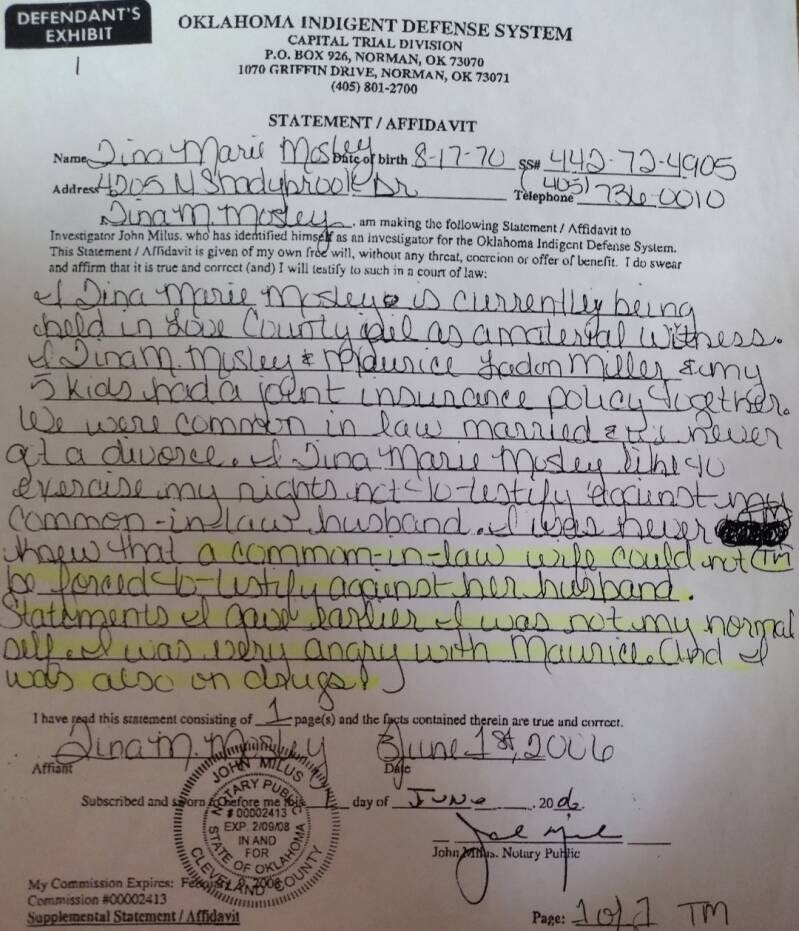
Defendants Exhibit 1: Tina Mosley Affidavit
Tina Mosley Invoked Her Common Law Marital Rights
On June 1, 2006, Mosley expressed her desire to invoke what she described as her common law marital rights and stated that she did not want to testify against Maurice Miller.
She further indicated that when she made the statement used by prosecutors, she was not herself. According to her own account, she was using drugs, emotions were running high, she was angry with Maurice Miller, and she was under extreme stress while being held by the State as a material witness.
These circumstances raise serious questions about the reliability of the statement that ultimately became the centerpiece of the prosecution's case.
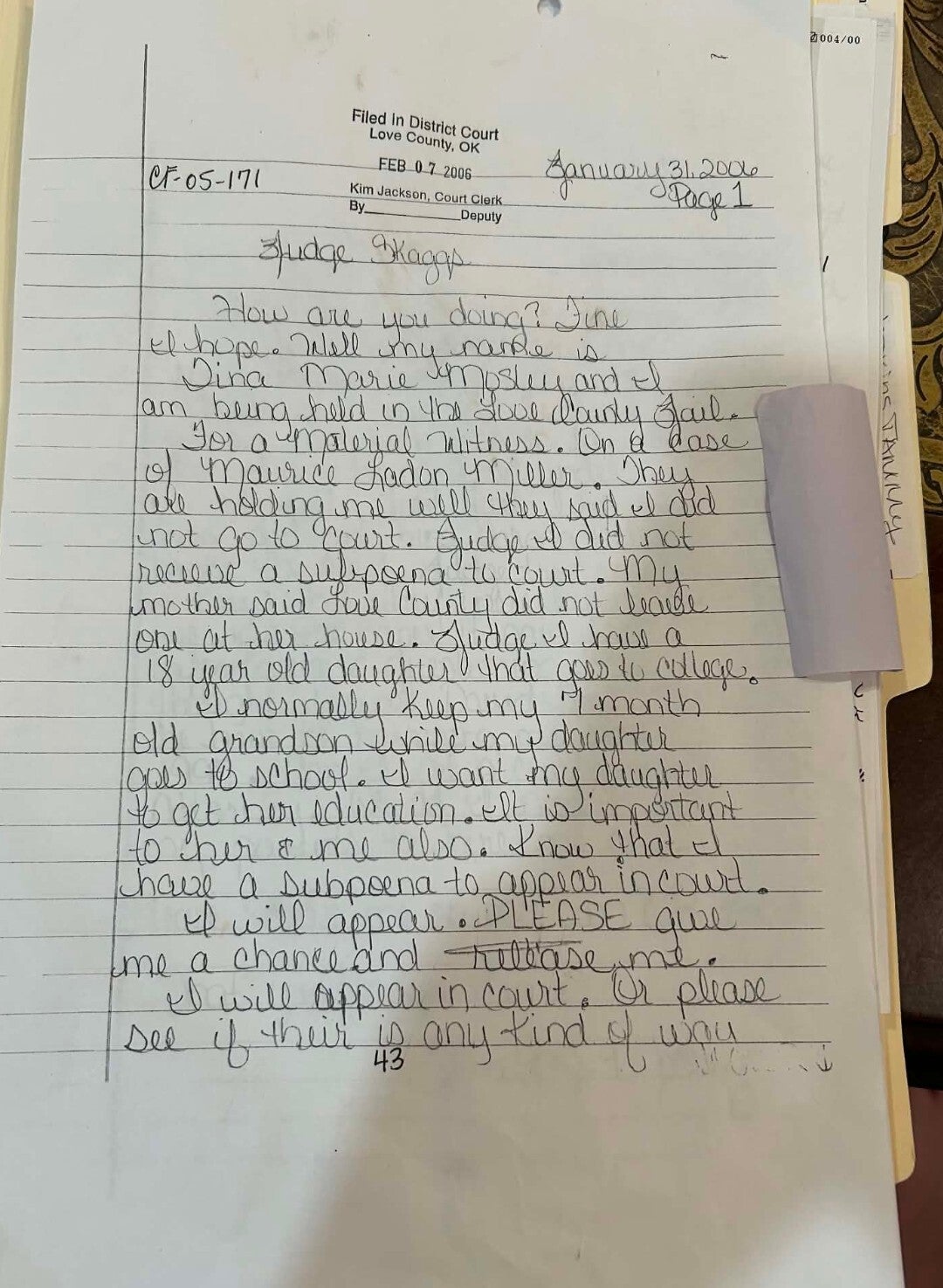
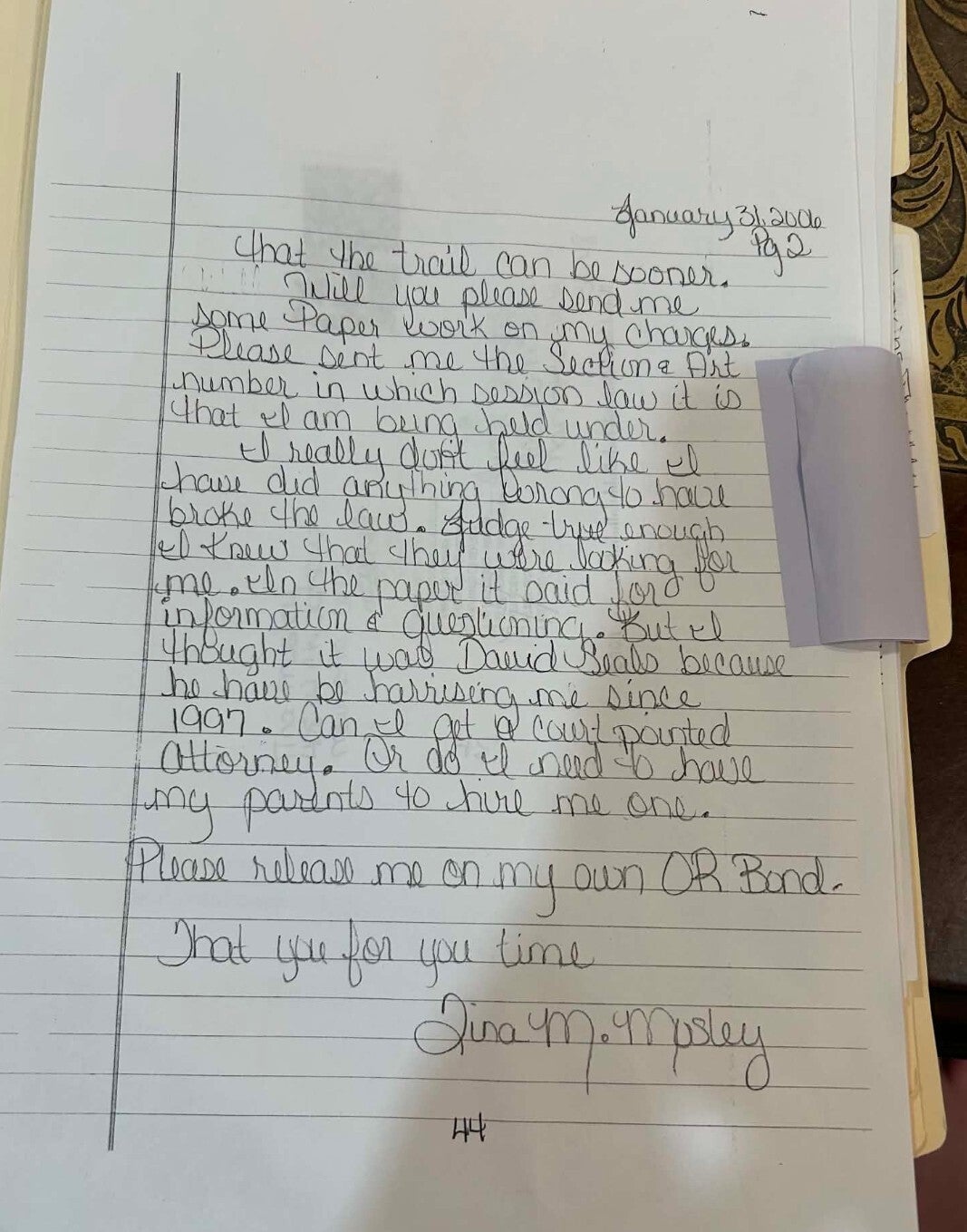
Defendents Exhibit 2: Tina Mosley's letter to the court alleging harassment by OSBI And Asking For Release
Tina Mosley: The Material Witness Detention
Prior to trial, Tina Marie Mosley was arrested and held under a material witness warrant.
She remained in custody for approximately six months.
During her detention, she wrote a letter to the court alleging harassment by OSBI agents dating back to approximately 1996 and continuing through the trial preparation process. That letter is part of the evidentiary record.
The significance of this detention cannot be ignored. The State's central witness was not simply cooperating with prosecutors. She was jailed and held under court authority while prosecutors prepared their case against Maurice Miller.
The defense position is that prolonged detention under a material witness warrant created substantial pressure on Mosley and raises legitimate concerns about whether her testimony was truly voluntary because from an evidentiary stand point she was coerced, manipulated and pressured.
Defendents Exhibit 3: Tina Mosley's Letter's To Maurice While Incarcerated
Jail Correspondence
While detained in the Love County Jail, Mosley and Miller exchanged written correspondence.
Mosley was serving as a trustee during her detention, allowing her to move throughout portions of the facility and deliver meals. This created opportunities for communication between them.
These letters are part of the evidentiary record and are relevant because they provide insight into Mosley's own explanations regarding how she acquired information about the case and what she actually knew at various points in time. None of this information she knew came from Miller but was first hand knowledge given by the investigator of this high profile case.
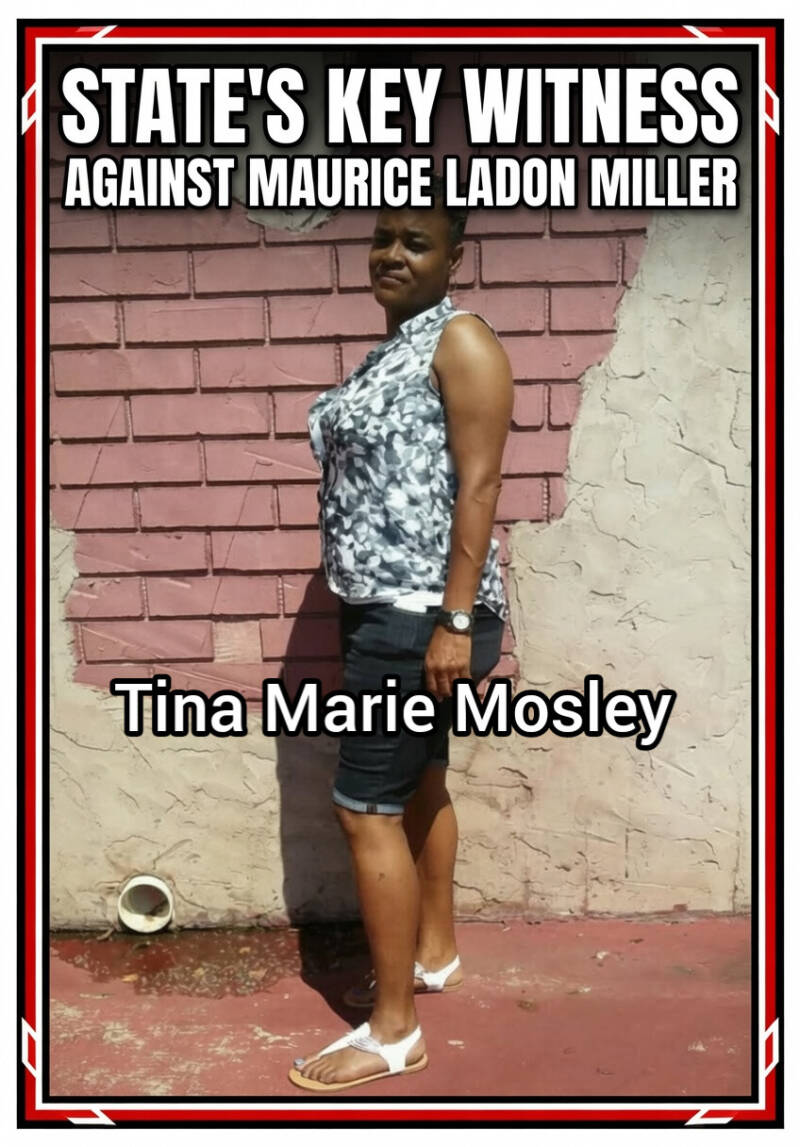
The Only Witness Linking Maurice Miller to the Crime
The State's case depended upon a single witness to connect Maurice Miller to the murders.
- No eyewitness identified him as the killer.
- No witness claimed to have seen him commit the murders.
- No witness testified to observing him at the crime scene during the commission of the offense.
The person the State relied upon was Tina Mosley, who claimed Maurice Miller told her he committed the crime.
According to the defense, several facts make her testimony unreliable:
1. The Statement Originated During a Personal Dispute
Mosley first contacted law enforcement while angry with Miller following the breakdown of their relationship. The defense contends that the allegation originated from personal conflict rather than independent evidence.
2. Years of Continued Police Pressure
After her initial statement, law enforcement repeatedly harassed her and brought Mosley in for questioning. Mosley herself stated she learned about the case through OSBI field agent David Seals. The defense contends that these repeated interviews exposed her to extensive details about the crime and shaped the information later presented as evidence against Miller.
3. She Was Not an Eyewitness
Mosley never witnessed the murders. Her testimony was based entirely on what she claimed Maurice Miller told her. The jury was therefore asked to convict based upon 'he say she say' of an alleged conversation rather than firsthand observation.
4. She Later Attempted to Invoke Marital Privilege
Mosley later sought to invoke her common law marital rights and indicated she did not wish to testify against Miller. She also stated that she was using drugs and was emotionally distressed when she originally gave the statement relied upon by prosecutors.
5. She Was Jailed as a Material Witness
Mosley was held in custody for approximately six months under a material witness warrant. The defense contends that this detention created powerful pressure to maintain the State's theory of the case.
Timeline Concerns: Murder Case & Witness Statement
One of the most troubling aspects of the case is the timeline itself.
Mosley gave her statement in 1996 but, Maurice Miller was not charged until 2005.
That is nearly a decade later.
If Mosley's statement was truly sufficient to establish guilt, why did it not result in charges when it was first made? Why did law enforcement wait nearly ten years before bringing a prosecution based upon the same witness?
These questions go directly to the strength and reliability of the State's evidence.
The defense position is that the ten-year delay demonstrates the absence of credible evidence capable of supporting a prosecution at the time the statement was originally given.
That question the validatiity of the entire case. Obviously there was no real evidence to use against Mr. Miller and this shows the frame work and the insidiousness of the state to set up an innocent black man for a crime and a case that was so high profile in Love County.

Letter From Maurice's Attorney About Tina Mosley
On March 27, 2006, Maurice Miller's attorney, Diane Box of the Oklahoma Indigent Defense System, sent him a letter regarding the State's key witness, Tina Mosley. The letter stated:
"In regard to your last letter dated the 19th of March, Tina was found on the southeast side of Oklahoma City.
I understand from information received from the OSBI agent on the case (Seals) that she is now telling them that you never told her anything about being involved in any way with the deaths in Marietta. She is being held without bond, but was told if she would give them a sworn statement implicating you that she would be allowed to post a bond. A hearing was held and she again refused to make any statements incriminating you. This, of course, is very good news because it means she is not willing to lie just to get out of jail."
Images of this letter from Maurice's attorney are provided below as evidence.
Defendants Exhibit: 4 Letter To Maurice From Attorney Diane Box
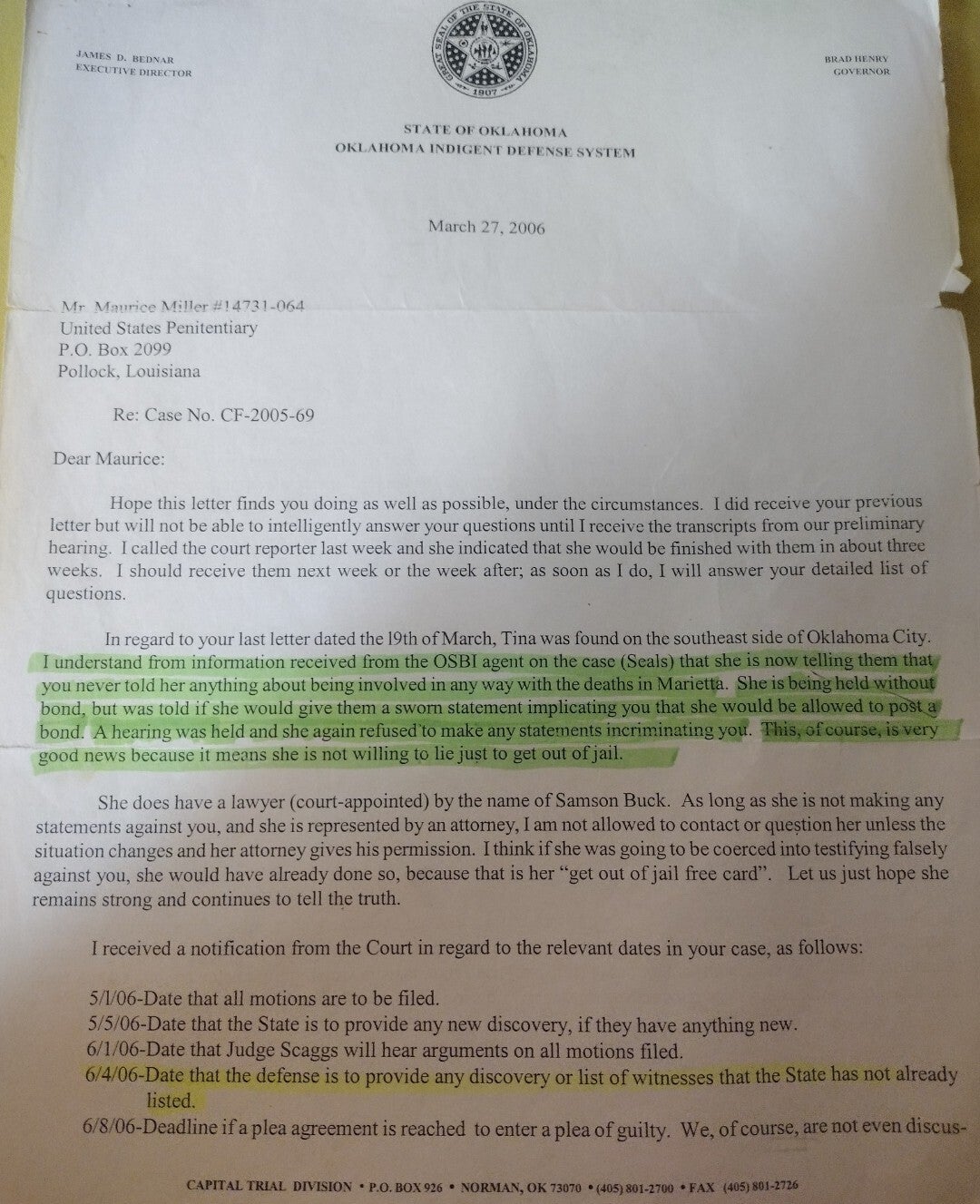
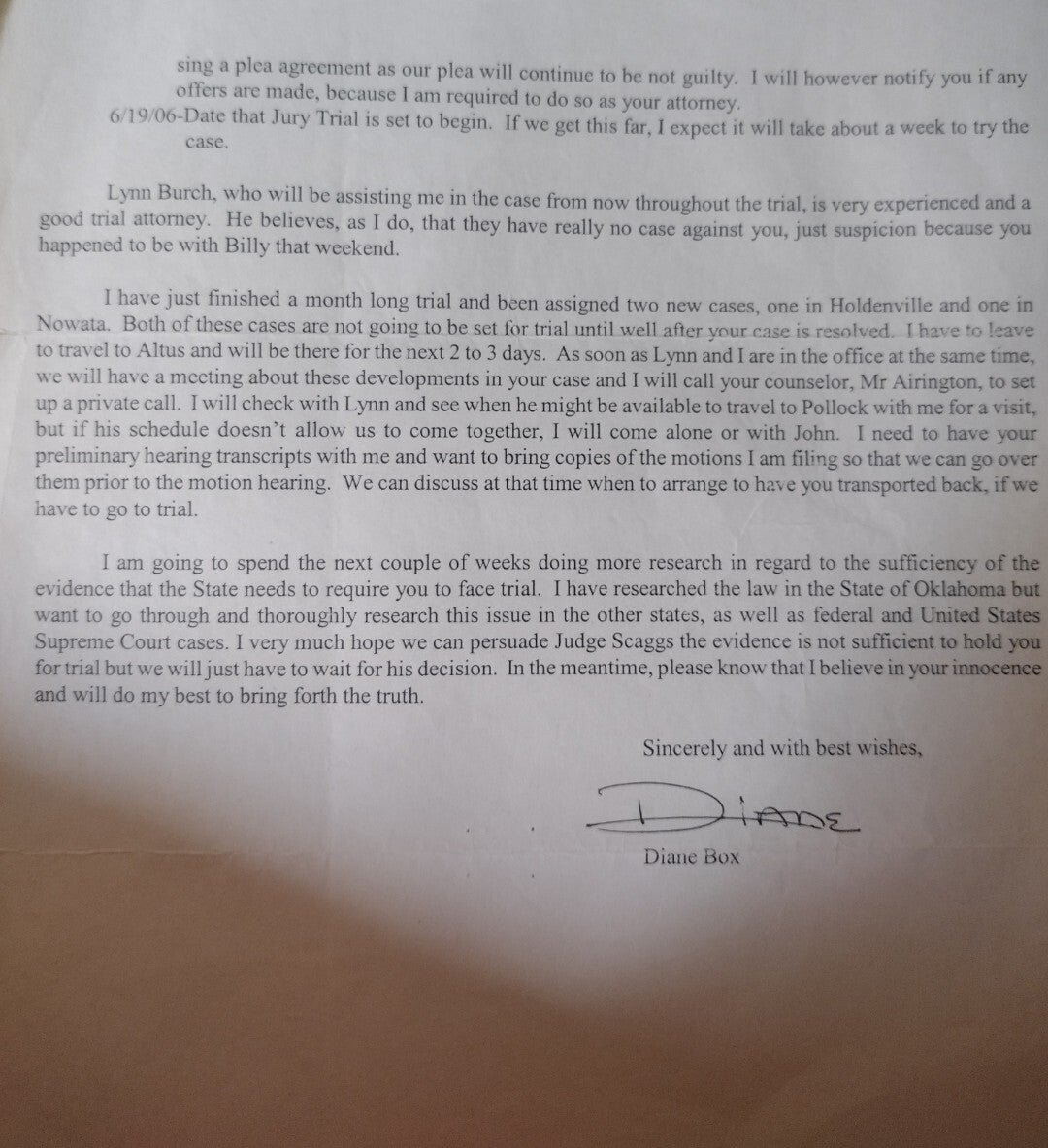
Tina Mosley The States Key Witness Stated Maurice Miller Never Confessed Anything to Her
This letter documents that, at that point in time, Tina Mosley was reportedly telling investigators that Maurice Miller never confessed anything to her. It also states that she was allegedly told she could obtain bond if she provided a sworn statement implicating him, yet she initially refused to do so.
The defense argues that this supports Miller's claim that Love County District Attorney Craig Ladd and OSBI Agent David Seals pressured and manipulated Tina Mosley into becoming the prosecution's witness. He contends that her statement was not the product of her free will, but of coercion and pressure while she was being held in jail. Tina Mosley herself sent a letter to the judge stating she was being harassed. To view this letter click here, and here
Mosley's testimony ultimately became the centerpiece of the State's case and was a major factor in Maurice Miller's conviction. The defense has consistently argued that, under these circumstances, her testimony should never have been presented to the jury.
The Bond Hearing Where Tina Marie Mosley Refused To Implicate Miller In The Murders
To check out the entire bond hearing transcript Bond Hearing of Tina Marie Mosley PDF
John Milus: Maurice Miller's Investigator Interviewed Tina Mosley
The Witness Who Said "No"
Tina Mosley willingly agreed to an interview with John Milus, an investigator for the Oklahoma Indigent Defense System. His question was simple: Did Maurice Miller ever tell you he committed these murders? Her answer was clear: "No." Not that she didn't remember, not that she was unsure, and not that it was possible. She said no.
Milus then placed the OSBI interview report in front of her—the same report the prosecution relied on to build its case against Maurice Miller. She reviewed the report and stopped at four separate statements that contained her initials. One by one, she rejected them.
Mosley said she did not recall ever telling Agent David Seals that Maurice Miller and his friends were planning a robbery. She did not recall saying Maurice confessed to breaking into a house through a kitchen window and committing a robbery. She did not recall telling Seals that Maurice Miller admitted to killing anyone. She did not recall saying Maurice threatened to tie her up and kill her if she left him.
These were not minor details. These were the statements that helped transform an eleven-year-old cold case into a murder prosecution.
The State's Case Depended on Tina Mosley
The State's case depended heavily on Tina Mosley, but according to the defense investigator's sworn affidavit, when she was confronted with the OSBI report inside the Love County Jail, she did not confirm the confession prosecutors claimed existed. Instead, she said she did not recall making the statements attributed to her.
Her initials appeared beside each disputed statement. That creates serious questions about how those statements ended up in the report and whether they accurately reflected what Tina Mosley actually said.
At the time, Mosley was being held in the Love County Jail as a material witness. She was not a free witness walking into an interview room by choice. She was a person in custody whose testimony the State needed to move forward with its case.
According to the affidavit, Mosley told investigator John Milus that Maurice Miller never confessed to her. She also distanced herself from the words contained in the OSBI report that prosecutors used to support their case.
The affidavit presents a witness whose account is different from the version of events used to convict Maurice Miller. This is not a minor inconsistency. It goes directly to the foundation of the prosecution's case.
Below are copies of the actual affidavit from Maurice Miller's investigator for public review.
Defendents Exhibit 6: Certified Affidavit From Investigator John Milus Where Tina Mosley Denies Implementing Maurice Miller In Murder Case Against Him
Reliability, Credibility, and Impact on the Conviction
The concerns surrounding Tina Mosley's testimony are not minor issues. They strike at the heart of the conviction itself.
Her testimony was obtained after years of police contact, repeated interviews, allegations of harassment, prolonged detention under a material witness warrant, and statements she later claimed were made while she was under the influence of drugs and experiencing intense emotional distress.
- She was not an eyewitness.
- She later attempted to avoid testifying.
- She alleged pressure from investigators.
- She spent months in jail before trial.
Yet her testimony became the central pillar of the State's case.
When a conviction depends primarily upon one witness and forcing her to testify, the credibility of that witness becomes inseparable from the credibility of the conviction itself. The reliability of Tina Mosley's testimony remains one of the most critical issues in evaluating whether justice was served in the prosecution of Maurice Miller or used to set up an innocent man to take the fall for a case where they could not find the real predators who committed this terrible inhumane act.
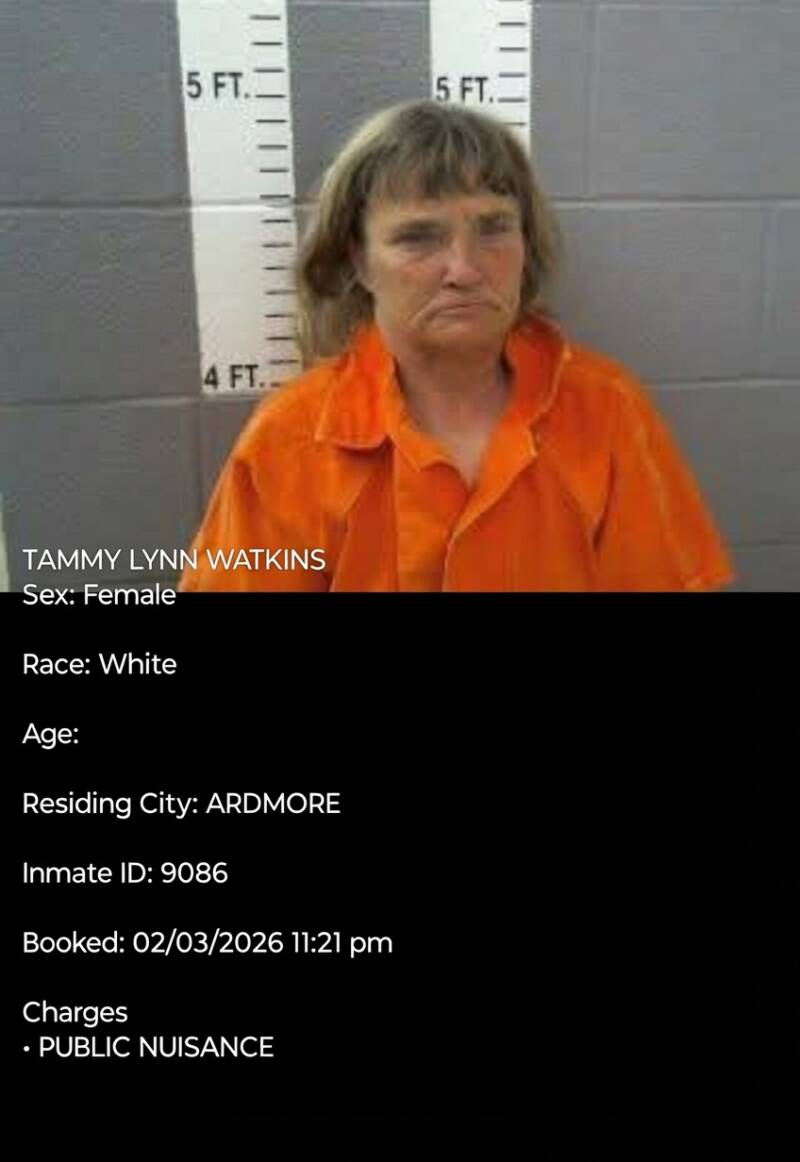
Eye Witnesses That Came Forward In The Case: Tammy Watkins
A true witness came forward in the case. One who is an eye witness and knew details about the case no one else knew. Her name is Tammy Lynn Watkins who wrote a statement explaining the entire crime in deep details while implementing her own boyfriend as a part of the crime, but after the OSBI, David Seals and DA Craig Ladd had suspect Maurice Miller she opted out of even talking or meeting with Miller's investigator to tell him the same thing in which she witnessed and told David Seals about the double murder in Marietta.
She still had already wrote a witness statement on December 5th of 1994. The defense doesn't understand why these people where not locked up and prosecuted for the West murders when it's obvious these are the suspects they where looking for. The actual killers & an eye witness can be found in the statement made below by Tammy Watkins–which is also newly discovered evidence for the defense that was never used or presented at Maurice Ladon Miller's trial, yet D.A Craig Ladd and David Seals knew about this but his hid it from the defense and the public.
Tammy's cursive handwriting is hard to read so here is what she wrote as a witness statement verbatim.
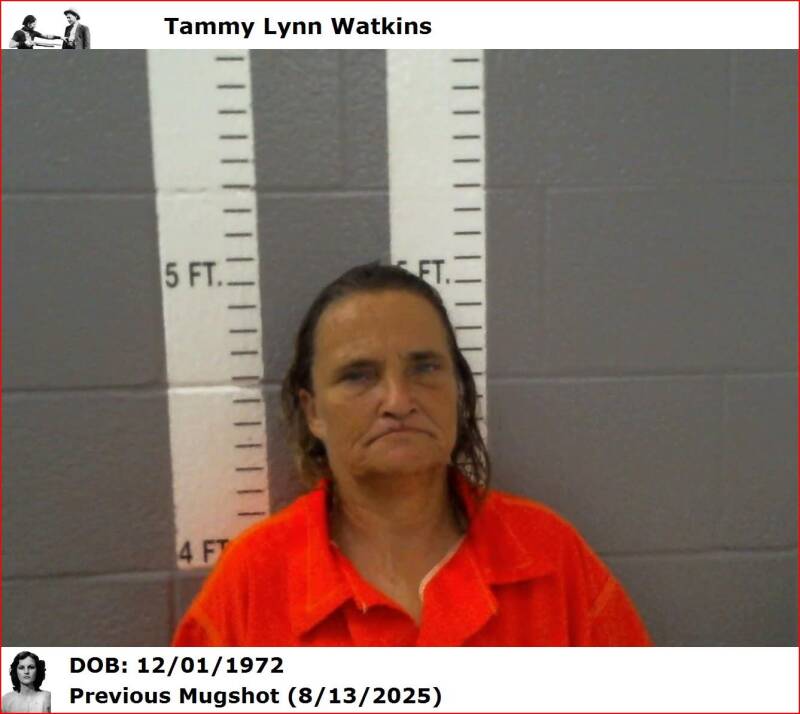
Statement of Tammy Lynn Watkins
First Statement Made By Witness Tammy Watkins
December 5, 1994
I was mowing Mr. & Mrs. Hughes' lawn and Thomas Anderson pulls up in his truck and asks if I want to go smoke a joint. I said yes. We cruise around and smoke a joint. Tom asks if I want to go to Marietta with him to feed his dogs. I said yes. When we get there we smoked another joint and Tom feeds the dogs.
We sat around there and Tom pulls out a quarter bag of crank. We snort a line and Tom asks if I want to go smoke a few joints with Ed & his wife. So we go to their house and smoke a few. When we leave their house we go back to Tom's, which is right down the road.
When we get there we snort another line of crank. We sat around there and played poker "Mexican sweat" which is a poker game. We were playing with poker chips. I counted all the poker chips. There is $151.50 in poker chips at his house.
We ran out of crank and Thomas said that he might know how to get some money. He went into the other room to make a phone call. When he came back he said that he could get some money from his grandparents in Marietta. It was around 7:30 because there is a clock in Tom's room, and we were supposed to be at Paris's house by 9:30. they live in Ardmore.
When we got to Marietta we drove around a little bit. We picked up this guy in front of the stores. Tom told me that it was a friend. I had never seen him before.
We pull up at this house and Tom tells me to stay in the truck that they would be back soon. He told me that his grandfather had Alzheimer's, that his grandfather knew the other man well. So I sat in the truck and listened to the Eagles tape.
The house we parked in front of is a white frame house. It has wood furniture on the porch, it also has a shed out back and a cellar at the left of the house. It also has a fence around it and it had a vase on the door.
I got tired of waiting so I decided to go see what was taking so long. I walked up to the house and knocked on the door. The door opens and Tom grabs me by the shirt and pulls me in. He yells "I told you to wait in the truck." I was scared because Tom was yelling at me. The host was standing by Tom. Tom had hold of his arm. I didn't think anything was wrong so I went back to the truck. I listened to the Eagles some more.
I was really getting tired of waiting so I went back to the house and knocked on the door and Tom answered it. I go in the house and the other guy hollers at Tom. Tom ran back there to the bedroom. Not thinking I followed him & the other guy is ransacking the room and he starts yelling "what is she doing in here."
I was standing there as Tom picks up the butcher knife and I was really scared. The old man groaned and Tom stabbed him somewhere by his chest. I started running for the door and the other guy grabs me and tells Tom that we are going to the truck to hurry up.
I thought my mind was playing tricks on me. We get to the truck and he tells me that I didn't see anything, that Tom was helping him because he had fallen out of bed. But I knew what I had saw.
Tom comes running up to the truck and jumps in. He pulls off a pair of gloves and pulls off a pair of panty hose. He sticks them behind the seat. I was yelling "what the hell happened." Tom yells "shut up and don't worry about it, you didn't see anything did you." I said "no way man."
We let the other guy off at the football stadium because Tom turned off the highway by the stadium. The other guy before he gets out gives Tom some money. When we got in the truck, just me and the other guy, before Tom gets in he pulls off a pair of gloves and a pair of panty hose. After he got out of the truck Tom sped off and he turns up the Eagles tape.
We didn't say much to each other on the way out to Toms house. When we get there Tom asks me to crawl through the window and unlock the front door because he lost his house keys out at the lake during the summer. We smoke another joint and play poker for awhile. Tom was real quiet and before he was laughing.
He asks me if I'm ready to go to Ardmore to Pam & Jerrys house. It had to be around 10:30 or after because the news was going off when we arrived at Pam & Jerrys house. We sat around there for awhile and smoked dope with Pam & Jerry.
When we leave there we were heading back to Marietta on 12th street and we got pulled over by Ardmore police. Tom tells me to stay in the truck. Tom gets out of the truck and the officer asks him where all the blood came from. I didn't hear what Tom said. The reason he stopped us was because he couldn't read the tag because it had mud on it. When Tom get back in the truck he says "damn that was really close."
I remember it was around 2:00 Am when we got back to Toms house because I looked at the clock. We sat around in his room and he asks if I wanted to smoke a joint. I said yes. We rolled it up in the house but had to go outside or sit in his truck to smoke it. We sat in his truck to smoke it.
We were talking how the moon looked when Tom started crying and told me he had killed the old man. I told him to shut up but he said "no, just listen to me."
He said that they just planned to rob them but the old woman got scared and started freaking out and the other guy tried to shut her up. The old man was saying "take whatever you want just don't hurt us." He said next thing he knew the other guy was stabbing her, and that's when I knocked on the door. He said that after I left, the other guy was trying to rape the old woman. The old man was begging him to make him stop and Tom said that he just snapped because he knew the old man could identify him and that he just remembers stabbing him over and over.
At first I really didn't want to believe him and he grabs me by the arm and yells "if I tell anyone he will say that I was in on it too."
The house was brick and it had a glass screen door and a wooden door. There was carpet on the living room floor. There was pictures on the walls and a shelf was against the wall in the living room. There's linoleum on the kitchen floor and in the bedroom there's a wooden frame bed and I saw a dresser along the wall. There was carpet in their room. There was blood everywhere Tom said. And when we got back to Toms he cleaned up in the bathroom of his house.
Their room is kinda in back. There's a clock hanging on the wall in the living room. Tom bought a quarter shirt of crank off of Jerry here in Ardmore for $25.00. Tom told me that he got 10000 out of his half.
No I didn't kill anyone. The older guy is 6 feet tall, long brown hair and medium build. I would 170 to 200 lbs. That was the first time I had ever met him. Tom said that they got checks every month. The old man was in shorts and the old woman had on a nightgown. I saw blood everywhere.
Me + Tom stayed up all that night playing poker. I still really was kind of shocked. We hung pretty close to Toms house the next couple of days. He was really strange acting. He hung up a blanket over his two windows in his room because he said if anyone pulled up to be real quiet. He got his gun out of the bathroom closet. He said it was just in case someone should show up.
Wednesday he asks me if I wanted to go fishing. I said no because it was to cold. So he asks if I want to walk down to the river. I said yes. Tom threw a pair of black shoes in the river. He said that they were old & wore out. He kept saying that he was sorry. I couldn't really believe it either.
Tom said that he just lost control and that if I said anything that I would go down too. The reason there is blood on my pants is because the other guy put his hand on my leg while in the truck. Tom said that the blood would convict me too.
They went thru a window and they both were stabbed numerous times each. The knife was left because they were in a hurry and the knife came out of the kitchen. Tom said the blade from the pocket knife broke so the other guy ran into the kitchen and came from the kitchen with a butcher knife. Tom said it happened too fast. I saw Tom stab him and pull it out and throw the knife on the floor.
They both were killed in the bedroom. Tom unlocked it and let me in because he said go around to the side window.
Tammy Lynn Watkins ( end of first statement)
Defense Exhibit 7: Tammy lynn Watkins First Handwritten Statement To Investigators. Pages 1-14
The Police/ Investigators David Seals Asked More Questions:
Tammy Adds Things She Omitted In Her First Statement
Second Statement Made By Tammy Watkins About The Same Murder Case:
The living room is to the right of the house okay. They both were laying on the floor when I saw them. The money was in the old mans wallet. Altogether $200 was took. This whole house was ransacked. They were looking for money.
Yes I saw what happened. The house was in the 1000 block. They put the gloves & panty hoses down there pants till they got to the house. Tom said it was all planned that if anyone blamed him that he would have a alowby for where he was at. He said he would say he was with me. I swear I know what happened.
Tom washed his truck Tuesday morning real good at Marrietteas car wash by the apartments because I went to the bathroom at the store by the carwash. I had to go next door to the laundry mat to go to the bathroom. I then bought a pepsi at the store when I got back to the truck. Tom was ready to go.
We went to the little store and Tom got gas & carton of cigrettes on credit at the store. We also got a chocolate milk and a cup of coffee then we went back to Toms house.
I left Toms house Thursday morning around 11 or 11:30.
This is a true + correct statement of what happened the night of Dec. 5, 1994.
Below are the actual images of the statement's written by Tammy herself as proof she said this. With that we will show you the versions the investigators typed up and took from her original statements leaving out a lot of things that mattered. All of what we have presented here, shows that Love county D.A Craig Ladd and OSBI field agent David seals intentionally set up Maurice Miller and his friends to take the fall for a double homicide that they did not commit.
Defense Exhibit 8: Tammy lynn Watkins Second Handwritten Second Statement To Investigators Pages 15 and 16
Defense Exhibit 9: OSBI David Seals Interview With Tammy lynn Watkins–What He Wrote Leaving Out Details Of Her Original Statement
Other Witnesses That Came Forward In Marietta Double Homicide Case:
Below are statements made by other witnesses that came forward in this case about things they knew or saw. They prefer to remain nameless.
Witness #3
In the early morning hours of December 5, I saw the sheriff's dispatchers daughter and her boyfriend sitting across the street from where the West's were murdered. These same two people showed up at a mutual friend's house covered in blood.
Witness #4
It's true, Maurice Miller is not the killer of James and Lena West. I know who committed this crime, but I'm afraid to come forward out of fear of repercussions.
Footprints, Fingerprints, and the State's Theory
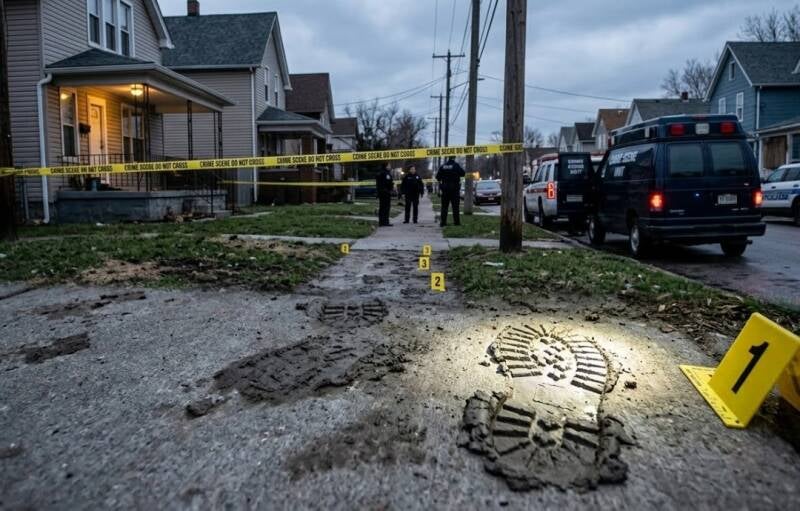
Three suspects were in this case–all of them friends. Maurice Miller, Ricky Hornbeak, and Billy Henderson. Former Love County DA Craig Ladd said investigators found 15 fingerprints at the crime scene. None matched any suspect — including Maurice Miller. That raises a basic question: Who left them? Those unidentified fingerprints undermine the State’s narrative. OSBI also searched Miller’s home and found no shoes that matched the crime scene footprints or his shoe size. The State instead called Jarod Stevenson, who testified he sold Billy Henderson a pair of Nike cross-training shoes. Prosecutors claimed the footprints in the flower bed and inside the West home were “similar” to that style.
“Similar” is not “identical.
"Similar” is not a match. It is not scientific identification — just a subjective resemblance, not proof beyond a reasonable doubt. Maurice Miller’s fingerprints were not at the scene. His footprints were not matched. No physical evidence placed him inside the West home. With 15 unidentified fingerprints and only “similar” footwear evidence, the prosecution’s theory deserves serious scrutiny. Convictions should rest on evidence that actually identifies the perpetrator — not vague similarities.
Read More: Oklahoma News
DNA Evidence Breakdown: Maurice Miller Was Eliminated
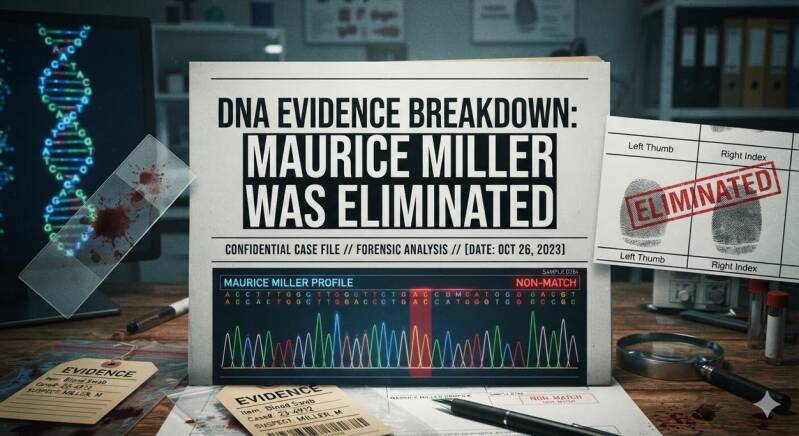
Original Suspects and Initial DNA Testing
There were three primary suspects in this case: Maurice Miller, Richard Hornbeak, and Billy Henderson.
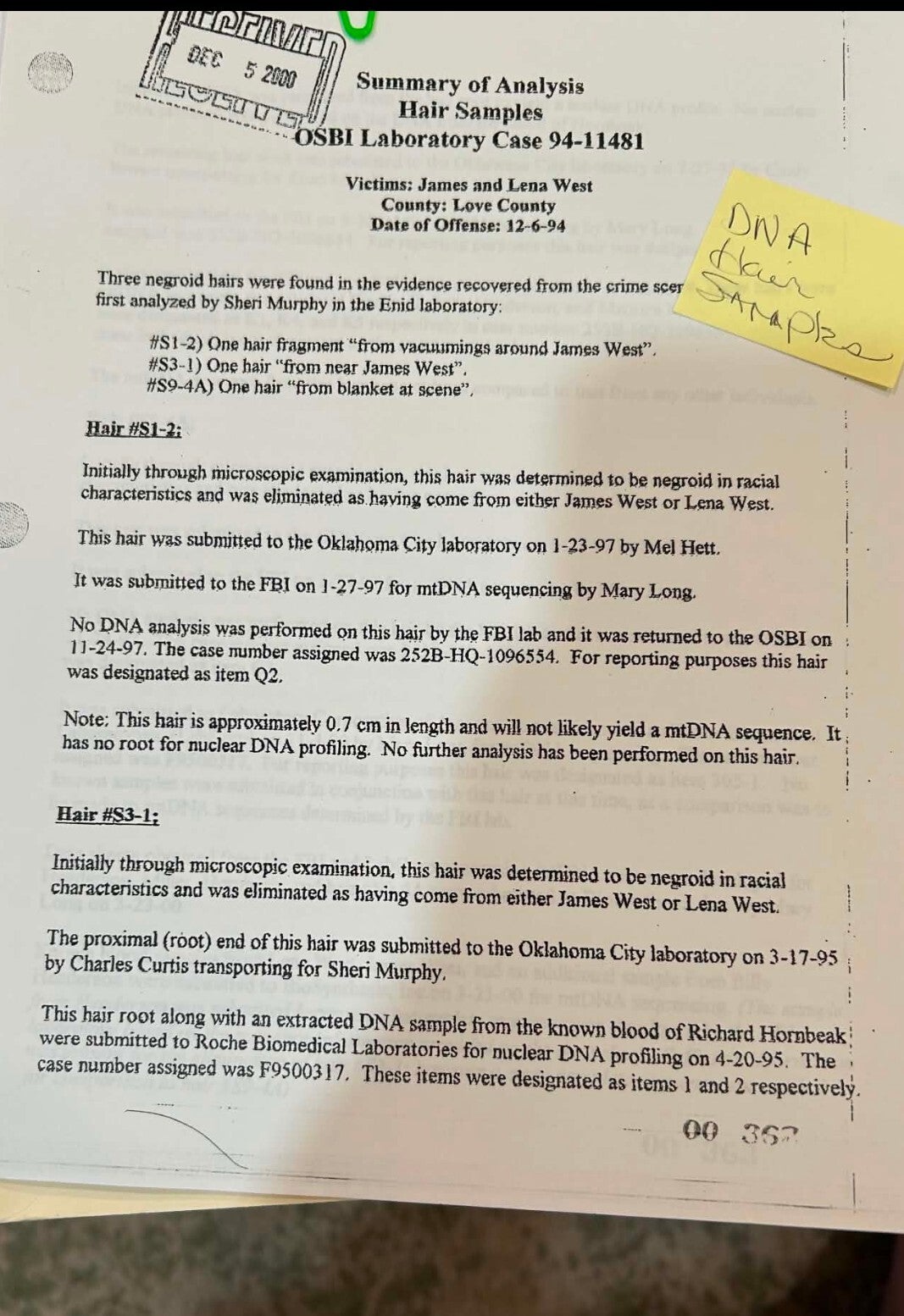
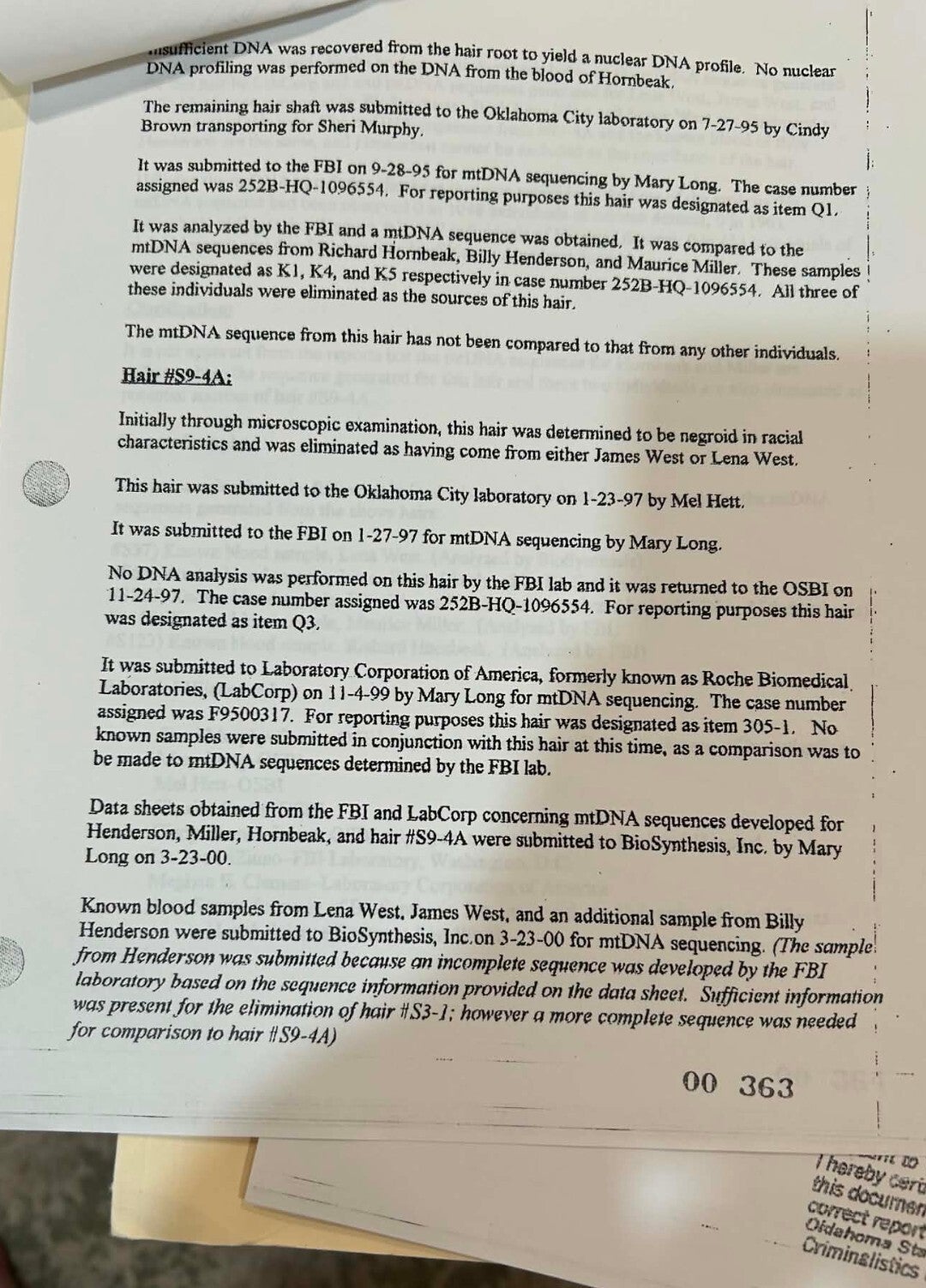
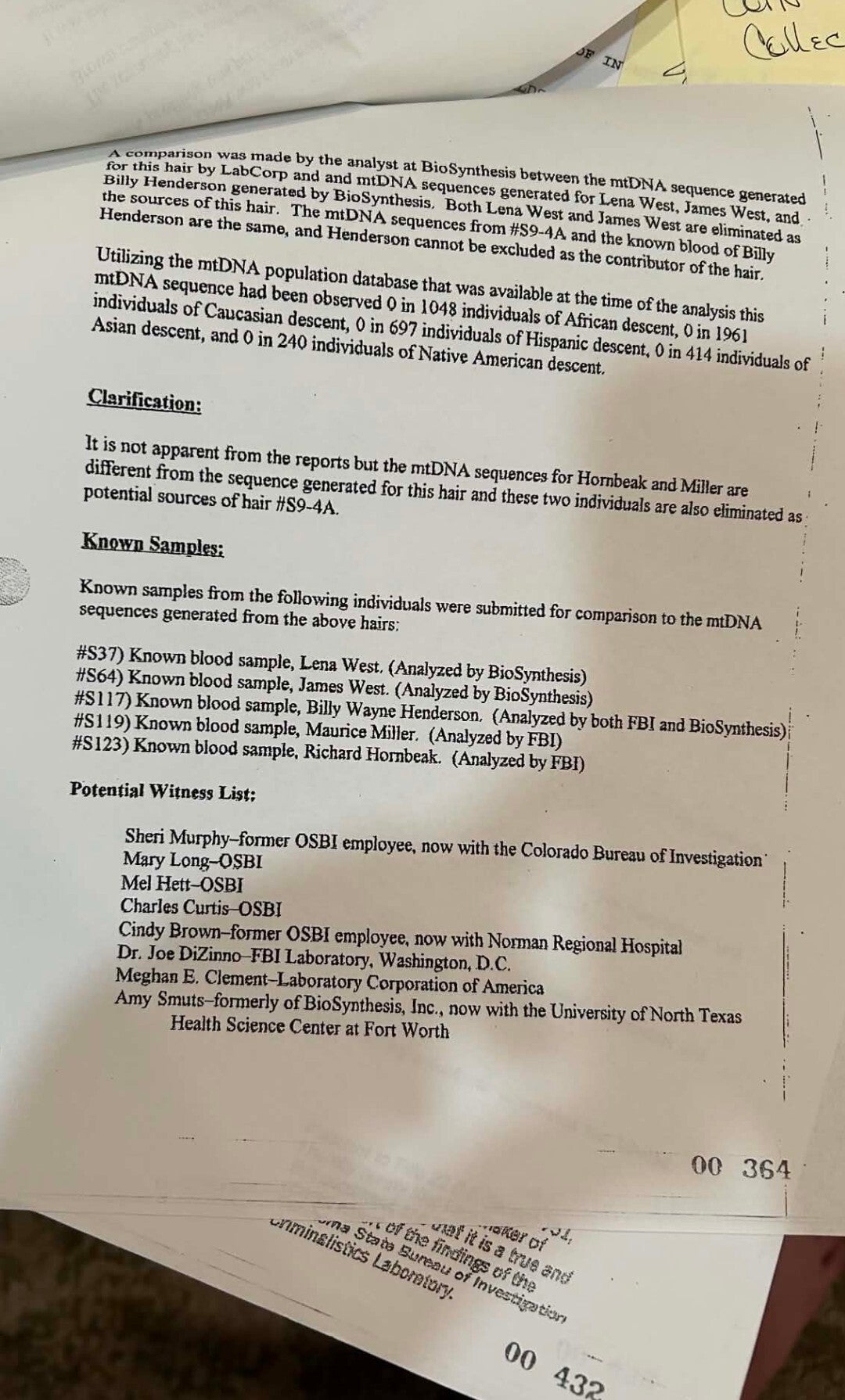
In January 1995, the Oklahoma State Bureau of Investigation (OSBI) collected Maurice Miller and the other two suspects DNA for testing. The testing found no DNA evidence linked him or any of the other's to the crime. A 1997 FBI document further states that Maurice Miller was eliminated as a contributor to the biological evidence recovered from the crime scene.
Defendents Exhibit 8: The FBI Suspect Elimination of Maurice Miller
Subsequent Testing of Billy Henderson
After Maurice Miller had been eliminated through DNA testing, co-defendant Billy Henderson later passed away. According to the records available to the defense, investigators subsequently submitted Billy Henderson's DNA to a laboratory in Texas for additional testing. However, the DNA of the other original suspects was not submitted for the same testing at that time.
Questions Raised by the Testing Process
This raises important questions. If new testing was considered necessary, why was only the deceased suspect's DNA re-examined? Why were all original suspects not tested under the same conditions and by the same laboratory?
The State's Theory of the Evidence
The State later relied on the Texas laboratory's findings regarding Billy Henderson as evidence against Maurice Miller, arguing that if Henderson was connected to the crime scene, Miller must have been involved as well. The defense disputes that conclusion, noting that the presence of one individual's DNA does not automatically establish the presence or involvement of another person.
The Crooked Handling Of the Evidenced Used In This Case
The handling of this evidence raises serious questions. Billy Henderson's original hair testing excluded him. Yet after Henderson had passed away, new hair samples were submitted for testing and suddenly reported as a match. That sequence of events deserves careful scrutiny.
The investigation was riddled with inconsistencies, and the handling of the forensic evidence reflects a deeply flawed process. This case bears all the hallmarks of a scandal and a deliberate setup. We contend that the investigation was conducted in a manner that wrongfully targeted innocent men and that the actions of then-Love County District Attorney Craig Ladd and the Oklahoma State Bureau of Investigation (David Seals) intentionally led to Maurice Miller and the other accused men being framed for a double murder they did not commit.
Exhibit 8: The Evidence That The OSBI Resubmitted Billy Henderson DNA After He passed
The OSBI resubmitted Billy Henderson DNA, but not Maurice Miller's. Per the initial testing Miller's DNA is still eliminated as a suspect.


Additional Evidence Not Presented to the Jury
The defense also possesses additional evidence, including a statement from Billy Henderson's brother, who reportedly stated that Maurice Miller was with him and that Henderson had sent Miller to a store to pick up coins. This information was not presented to the jury during trial.
Need for Independent Review
These issues raise serious concerns regarding both the DNA evidence and the reliability of the State's primary witness. Taken together, these discrepancies warrant a thorough and independent re-investigation of the entire case. Accordingly, the defense and advocacy team are calling for a full review of the record and the consideration of newly discovered evidence, along with evidence that was unavailable to the defense and was concealed at the time of trial.
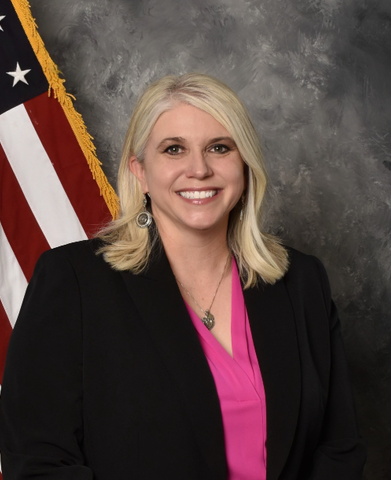
Melissa Handke
The active District Attorney for District 20 (including Love County)
OKLAHOMA PUBLIC OFFICIALS DIRECTORY 🏛️
These are the people who can make changes. Contact These state and local officials regarding Freeing Maurice and make noice on his behalf. You can also do more to help by taking a moment to sign the Fight for the freedom of Maurice Ladon Miller https://c.org/jkfN4HrYkr
these are current verified contact directory:
👤 GENTNER DRUMMOND
🔹 Title: Oklahoma Attorney General
📍 Address: Office of the Attorney General, 313 NE 21st St., Oklahoma City, OK 73105
📞 Phone: (405) 521-3921
🌐 Website: oklahoma.gov
👤 KEVIN STITT
🔹 Title: Oklahoma Governor
📍 Address: Office of the Governor, 2300 N. Lincoln Blvd., Suite 212, Oklahoma City, OK 73105
📞 Phone: (405) 521-2342
🌐 Website: oklahoma.gov
👤 MELISSA HANDKE
🔹 Title: District 20 District Attorney (Serving Carter, Johnston, Love, Marshall, and Murray Counties)
📍 Address: Love County DA Office, 403 W. Main, Room 301, Marietta, OK 73448
📞 Phone: (580) 276-9441
🌐 Website: oklahoma.gov/dac/district-attorneys/district-20
------------------------------
Take Action: Help Bring Attention to This Case
The Truth Must Come Out!
You have now reviewed the evidence, the timeline, and the facts presented in Maurice Miller’s case.
Justice depends on transparency, accountability, and the willingness to look closely at the evidence — especially when serious questions remain unanswered.
If, you read this case, and you too have questions or believe Maurice Miller’s conviction deserves further examination, your voice can help bring attention to the facts and encourage a closer review.
Help Demand a Review of the Evidence
Contact news organizations, criminal justice advocates, and public officials in Oklahoma and Love County. Ask them to review the evidence, examine the circumstances surrounding this conviction, and seek answers to the questions raised by this case.
A case cannot be fully examined if the evidence is ignored.
Ways You Can Help
- Contact journalists and news outlets and ask them to investigate Maurice Miller’s case.
- Contact Oklahoma officials and request that they review the evidence and concerns presented.
- Contact criminal justice organizations and wrongful conviction advocates who work to examine possible miscarriages of justice.
- Share this case with others so more people can review the evidence and form their own conclusions.
The Love County District Attorney’s Office
is located at 405 W. Main St., Suite 301, Marietta, OK 73448. The office can be reached by phone at (580) 276-9441 or by fax at (580) 276-9442. For more details, you can visit the District 20 - Oklahoma.gov directory.
Your Voice Matters
For years, Maurice Miller’s story has remained unheard by many.
Now the evidence is available for the public to examine.
The goal is simple: make sure the evidence is seen, the questions are asked, and the truth has an opportunity to come forward.
Add comment
Comments